.png)
Mitsubishi Power has announced the completion of functional testing for its next-generation gas turbine control system, a milestone that is expected to have direct implications for thermal power plant operators across Europe. Developed jointly with a leading domestic utility partner and now validated under demanding test conditions, the new control platform is engineered to manage the increasingly complex operational profiles of high-efficiency gas turbines and combined-cycle units. For European utilities, independent power producers, and industrial cogeneration operators, this system targets the twin priorities of higher operational flexibility and stricter emissions performance, while enabling deeper automation across critical assets in the power generation landscape.
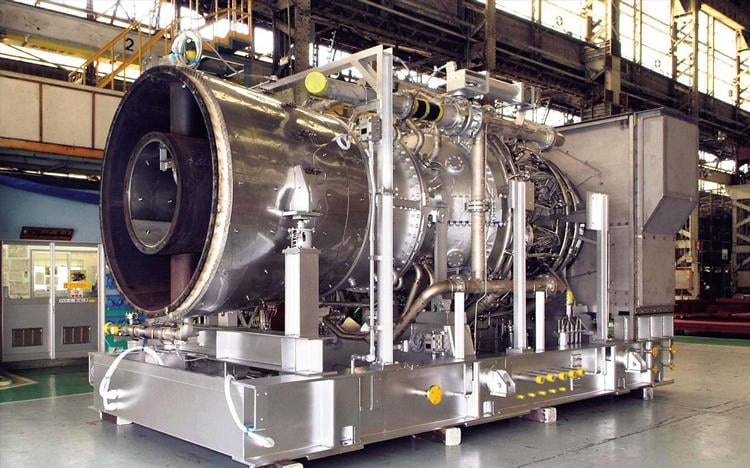
The control system is designed from the ground up to handle substantially larger data volumes generated by today’s advanced gas turbines, including high-frequency sensor readings, combustion diagnostics, and real-time vibration and performance data. By consolidating these data streams into a modern control architecture, the platform supports faster response to changing grid conditions, such as fluctuating renewable input and sudden load swings. This is particularly significant for European grids, where the rapid growth of intermittent solar and wind power requires gas-fired plants to operate more dynamically, ramping up and down frequently without compromising reliability or lifetime asset health.
At the heart of the new solution is an enhanced automation layer that integrates advanced process control, turbine protection, and auxiliary system management into a unified environment. Instead of relying on multiple standalone controllers with fragmented logic and data silos, plant operators can orchestrate fuel systems, air flow, cooling, lubrication, generator alignment, and balance-of-plant equipment from a single, harmonized platform. This integration reduces the risk of coordination errors, shortens troubleshooting cycles, and improves the consistency of automated start-up, shutdown, and load-following sequences. For European facilities facing tighter staffing levels and a shortage of experienced control engineers, this consolidated approach is intended to support safer, more predictable operations.
The system also emphasizes cybersecure connectivity and remote lifecycle services, both of which are increasingly important in Europe’s regulatory and risk environment. Built to align with widely recognized industrial cybersecurity frameworks and emerging power sector guidelines, the platform includes network segmentation, role-based access control, continuous security monitoring hooks, and secure update mechanisms. These capabilities enable operators to connect turbines and control rooms to enterprise-level monitoring centers, OEM analytics platforms, and, where permitted, cross-border fleet optimization hubs, while maintaining governance over critical operational technology networks.
From an automation standpoint, the control solution embeds advanced monitoring, diagnostics, and analytics services that extend beyond traditional supervisory control and data acquisition. High-speed data acquisition combined with model-based algorithms provides early detection of combustion anomalies, performance drifts, and component degradation. European utilities can leverage these capabilities to move further toward condition-based and predictive maintenance regimes, thereby reducing unplanned outages, optimizing major inspection intervals, and maximizing availability during grid-critical periods. The platform is engineered to support integration with existing plant historian systems and enterprise asset management tools, enabling cross-plant benchmarking and fleet-level decision-making.
The new control system’s architecture is also compatible with the growing emphasis on low-carbon and hydrogen-ready gas turbines across Europe. As countries accelerate coal retirements and consider repurposing existing gas-fired assets as flexible backup for renewable-heavy systems, control platforms must be able to handle varying fuel compositions, including blends of natural gas and hydrogen. The Mitsubishi Power system is conceived to support future combustion tuning enhancements and more complex fuel management strategies, which can be critical for maintaining stable flame characteristics, low NOx performance, and acceptable part-load efficiency under diverse operating scenarios. This forward compatibility is a key factor for European plant owners considering life extension and repowering projects instead of full greenfield developments.
Plant commissioning and integration workflows have been a central focus of the development and testing phase. The functional tests confirmed that the system can handle simulated real-plant conditions, including rapid start commands, frequency response requests, grid disturbance events, and partial equipment failures. For engineering, procurement, and construction (EPC) firms and system integrators in Europe, this validation is expected to simplify front-end engineering design and reduce integration risks on multi-unit power islands. The system’s modular hardware and software design enables flexible deployment options, from single-turbine retrofits to full-plant automation upgrades that encompass steam turbines, heat recovery steam generators, and balance-of-plant systems.
With the functional testing now complete, Mitsubishi Power plans to advance to broader system validation phases, including simulations that closely mirror European network code requirements and regional grid operator specifications. The company aims to make the control platform commercially available for new-build projects in the near term, followed by structured retrofit programs for existing fleets. For European stakeholders, this staged rollout is likely to present opportunities for pilots and early adopter agreements that combine plant-level performance guarantees with digital service contracts, covering software updates, periodic tuning, and remote operational support.
The introduction of this next-generation gas turbine control system also reflects a broader trend in Europe toward integrated digitalization of power generation assets. Utilities and industrial energy users increasingly look for automation solutions that bridge traditional controls with higher-level optimization layers, such as model predictive control for combined-cycle plants, automated emissions compliance reporting, and real-time market bidding support. Mitsubishi Power’s platform has been designed with open interfaces to connect to such supervisory systems, enabling a more seamless flow of operational data from field devices to trading desks and enterprise planning teams. As a result, thermal plants can be dispatched more intelligently, aligning physical operation with intraday market signals, grid balancing needs, and corporate sustainability strategies.
For plant managers, maintenance leaders, and control engineers across Europe, the system’s combination of high-speed control, data-rich diagnostics, and secure connectivity is expected to help address several converging challenges: aging control infrastructure, tightening emissions and reliability requirements, and intensified pressure to deliver flexible, cost-effective capacity in support of the energy transition. By tying together turbines, auxiliary systems, and digital services into a cohesive automation environment, Mitsubishi Power positions this new platform as a foundation for long-term modernization roadmaps. In practice, this means European facilities can plan phased control upgrades while maintaining continuity of operations, ultimately migrating toward a more autonomous, data-driven power generation model that remains anchored in rigorous safety and reliability standards.







.jpeg)

.jpg)
.jpg)






.jpg)




.jpg)
.png)



















.webp)











.jpg)