


.png)
Taiwanese automation specialist Aurotek has signalled a robust acceleration in demand for smart manufacturing robots and integrated automation solutions across Asia, after reporting a more than 50% year-on-year increase in revenue driven primarily by orders from industrial customers in electronics, precision components, and other high-value manufacturing segments. The company, which focuses on factory automation systems, industrial robots, and intelligent production solutions, said rising labour costs, tightening quality requirements, and ongoing regional supply chain reconfiguration are pushing manufacturers in Taiwan, China, and Southeast Asia to scale up investments in automation and digital production infrastructure. Aurotek’s management indicated that order visibility for 2026 is improving, with backlog and inquiry pipelines expanding particularly in projects involving robotised assembly, automated material handling, and integrated inspection systems for industrial customers. This outlook underscores the continued structural shift among Asian factories towards higher levels of automation, with industrial robots and smart systems becoming central to competitiveness and resilience strategies.
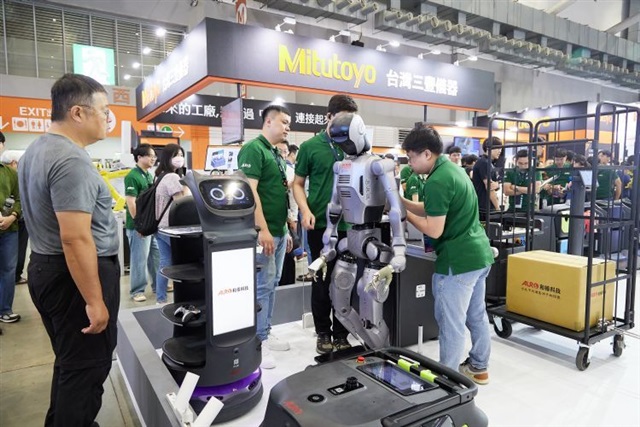
From a B2B industrial automation perspective, the latest update from Aurotek is especially relevant for plant operators, system integrators, and equipment vendors who are directly engaged in modernising production assets. The reported revenue growth is not tied to consumer-facing robotics, but to factory and plant-level automation projects that leverage industrial robots, drives, motors, actuators, and advanced control systems within complex production lines. Aurotek’s focus areas intersect with several core categories for industrial automation stakeholders, including machine tools, metalworking lines, electronics manufacturing, and integrated processes and IT solutions. The company’s smart manufacturing deployments frequently combine robotic handling with precision positioning, automated optical inspection, and data-driven monitoring of throughput and yield. For plant managers planning mid-term capital expenditure, Aurotek’s upbeat guidance serves as a market signal that industrial robot pricing, delivery lead times, and engineering resources may tighten as regional demand grows, particularly in segments where cycle times and quality tolerances are becoming more stringent.
The company highlighted that automation demand is being supported by electronics and semiconductor-related customers who are expanding or upgrading capacity in Taiwan and other parts of Asia. These customers are deploying robots and advanced automation not only on final assembly lines, but also in upstream processes such as component handling, testing, and packaging, where consistent repeatability and traceability are critical. In parallel, manufacturers in precision machining and component fabrication are turning to robotic systems to stabilise output quality and reduce reliance on skilled manual labour that is increasingly hard to recruit and retain. This dynamic aligns with broader regional trends in which Asian suppliers are moving up the value chain and adopting more sophisticated automation as they target higher-margin, technology-intensive contracts, including those in electric vehicles, industrial electronics, and specialised machinery. For system integrators and OEM partners, Aurotek’s growth trajectory suggests expanding opportunities to collaborate on turnkey automation cells, brownfield retrofits, and end-to-end smart factory programmes.
A key element in Aurotek’s positioning is its integration of robotics with smart manufacturing concepts that fall squarely within the Integrated Processes and IT solutions and Industrial R&D categories. The company is not only supplying robot arms and motion platforms, but also engineering integrated control, data acquisition, and supervisory systems that enable more granular monitoring of equipment performance, energy consumption, and product quality. By combining industrial PCs, edge controllers, and connectivity with plant-level MES and ERP systems, Aurotek aims to deliver automation platforms that support predictive maintenance, dynamic scheduling, and real-time production optimisation. This approach is increasingly important for manufacturers in the region that must meet stringent quality certifications, comply with customer audits, and provide extensive traceability data across global supply chains. As more factories digitise their operations, such integrated solutions will be a core component of competitive differentiation, allowing operators to react faster to demand volatility and supply disruptions while controlling costs.
From the standpoint of plant and facility managers, the reported 50%-plus revenue growth carries several practical implications. First, it provides evidence that more industrial peers, especially in Asia, are moving past pilot projects and into full-scale deployment of smart manufacturing cells and automated lines, suggesting a potential need to benchmark automation maturity and investment pace against regional competitors. Second, growing demand may influence delivery lead times for robotic systems, motion control components, and automation engineering services, reinforcing the importance of early planning for major retrofit or expansion projects. Third, as automation suppliers like Aurotek scale up, they are likely to broaden their regional service networks, technical support, and training offerings, which may lower barriers for mid-sized plants considering more advanced robotics or digital integration. For technology vendors, this environment also presents collaboration opportunities in motors, drives, sensors, industrial metrology instruments, and power distribution hardware that are essential to reliable robotised production.
Strategically, the momentum behind Aurotek’s order book also reflects the wider regional policy and industrial context. Governments across Asia are promoting smart manufacturing, industrial digitalisation, and higher degrees of localised, automated production to enhance resilience and reduce exposure to labour shortages and external shocks. Incentive schemes, R&D grants, and industrial upgrade programmes are encouraging factories to adopt robotics, AI-enhanced inspection, and digitally connected equipment as part of broader Industry 4.0 and smart factory initiatives. In such a policy environment, companies like Aurotek are positioned as key implementation partners capable of translating high-level strategies into concrete automation projects on factory floors. For stakeholders in sectors such as metalworking, machine tools, and precision engineering, monitoring developments at leading regional integrators and robot suppliers can provide useful insight into emerging technical standards, best practices for deployment, and evolving cost structures for automation projects. As 2026 unfolds, Aurotek’s performance and guidance will continue to serve as an important barometer for the health and direction of Asia’s B2B industrial automation and smart manufacturing markets.
%20(2).png)
%20(22).png)
%20(20).png)
%20(19).png)
%20(18).png)
%20(2).png)
%20(4).png)
%20(5).png)
%20(10).png)
.png)
%20(1).png)
%20(10).png)
%20(8).png)
%20(7).png)
%20(2).png)
.png)
%20(1).jpg)
%20(6).png)
%20(5).png)
%20(4).png)
%20(3).png)
%20(1).png)
.png)


.png)

%20(1).png)
.png)
.png)
%20(2).png)
.png)

.png)


