Abd Hafiz bin A Bakar is the Chief Executive Officer of Global Exhibitions & Conferences Sdn. Bhd., co-organiser of the Langkawi International Maritime & Aerospace Exhibition 2027 (LIMA 2027). Previously serving as Managing Director of the company and LIMA 2025, he brings extensive experience in international exhibition and event management, strategic partnerships, commercial development, and government and industry engagement. He leads the strategic direction and preparations for LIMA 2027, taking place from 20–24 April 2027 in Langkawi, Malaysia, under the theme “Sustainable Vision Across Sea, Sky & Space,” fostering international collaboration across the aerospace, maritime, defence, technology and commercial sectors.
1. Which emerging technologies will have the greatest impact on aerospace and maritime industries?
I think the biggest change will not come from just one technology, but from how smartly we combine different technologies in our current work.
Artificial intelligence is an obvious example. However, I think we need to move beyond the excitement surrounding AI and ask a more important question: what problems are we actually solving?
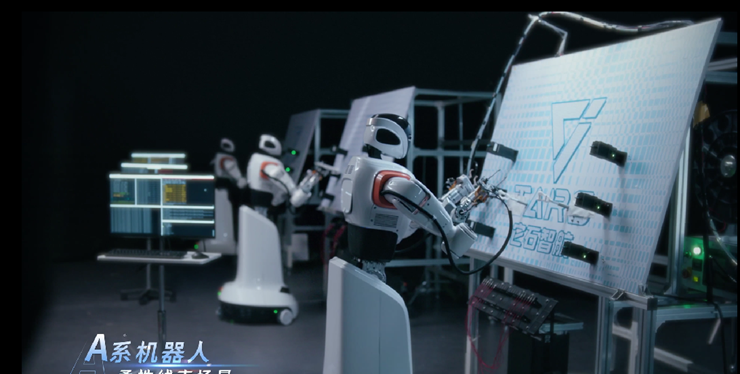
In aviation, predictive maintenance helps engineers identify potential component failures before they disrupt operations. In maritime transport, intelligent routing systems assist operators in optimizing fuel consumption, anticipating weather conditions, and improving voyage efficiency. These practical applications demonstrate how technology can directly contribute to safety, reliability, and operating costs. Autonomous systems represent another significant development; however, we must approach autonomy with both ambition and discipline. An aircraft or vessel operates in an environment where mistakes can have serious consequences. Introducing greater autonomy involves more than just developing sophisticated software. It requires reliable sensors, secure communications, rigorous testing, clear regulatory frameworks, and, most importantly, accountability.
Cybersecurity is equally important. As aircraft, vessels, ports and airports become increasingly connected, the industry creates new efficiencies but also new vulnerabilities. A technologically advanced operation is not necessarily a resilient one. The two must develop together.
Another area I find particularly significant is the convergence of aerospace, maritime and space technologies. Satellite communications, Earth observation and advanced navigation systems are increasingly supporting activities ranging from maritime surveillance to aircraft tracking and disaster response. What were once relatively separate industries are becoming more interconnected.
I would also like to caution that not all technological breakthroughs will necessarily become commercially viable right away.
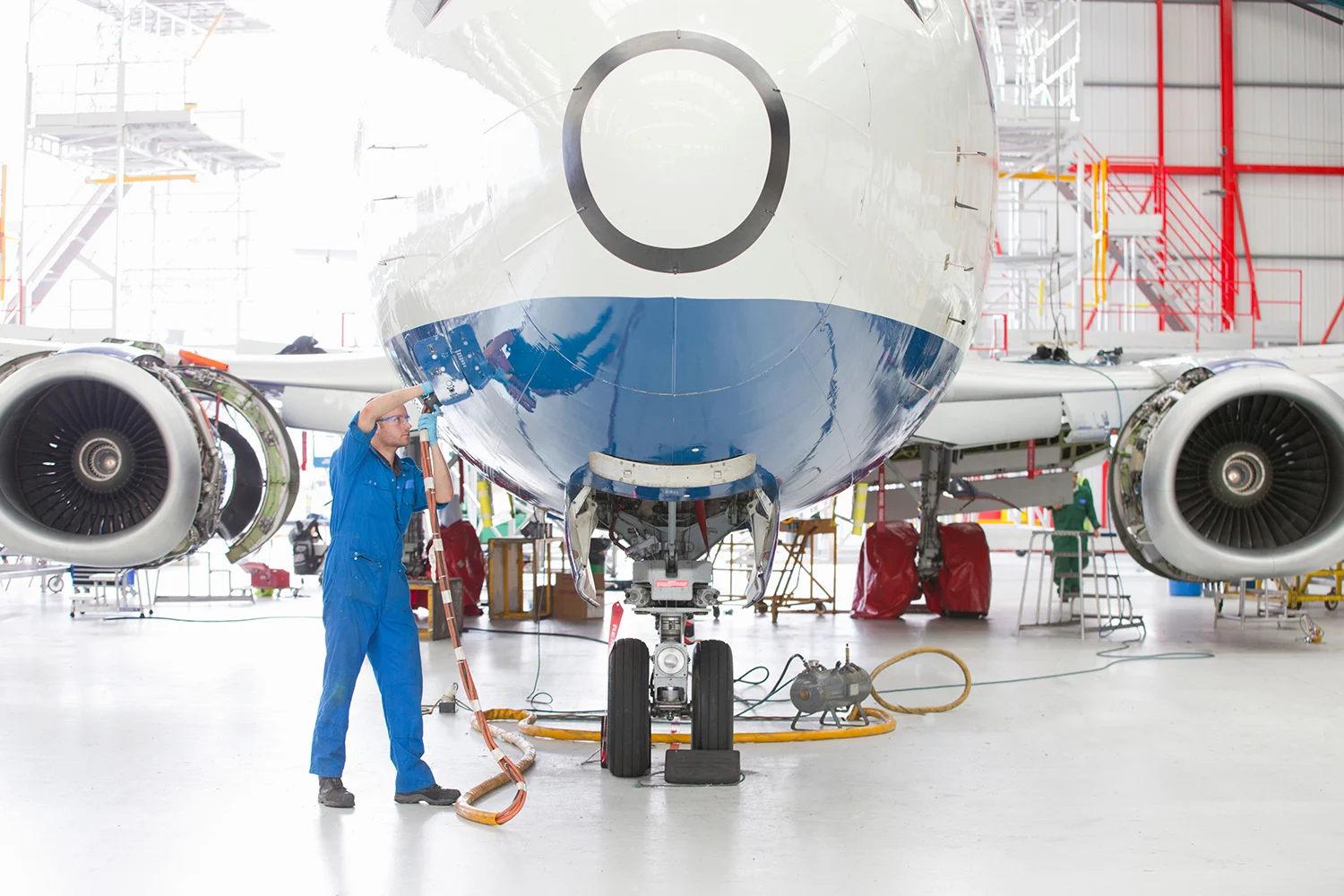
There is a significant gap between showcasing a technology and implementing it safely, affordably, and reliably throughout an entire industry. Factors such as certification, infrastructure, workforce preparedness, and long-term maintenance costs all play a role in determining the success of innovation. For countries such as Malaysia, the opportunity is not necessarily to develop every new technology independently. It is to identify where our engineering capabilities, manufacturing expertise, maintenance services and technical talent can contribute meaningfully to international supply chains. We should also recognise the people behind these advances. Engineers, technicians, researchers, pilots, seafarers and maintenance professionals carry an enormous responsibility. Technology should strengthen their capabilities, not diminish the value of their experience and judgement. Ultimately, I believe that progress should not be assessed by the sophistication of a technology. Instead, it should be evaluated based on its ability to enhance safety in operations, strengthen industries' resilience, and better prepare individuals to fulfill their responsibilities.
The most successful innovations are not necessarily the most spectacular. They are the ones that build the industry's trust, exhibit reliability and safety, and provide significant opportunities for growth and continuous innovation.
2. What role will sustainability play in the future of aviation and maritime operations?
We need a realistic conversation about sustainability in capital-intensive industries like aviation and maritime transport. Emissions must be reduced without compromising safety, affordability, and essential services. Aviation connects economies and tourism, while maritime transport handles most international trade. Neither can stop operations for cleaner alternatives. Sustainability should be seen as an engineering challenge, not just an environmental goal. For instance, sustainable aviation fuel can reduce lifecycle emissions but faces obstacles like production capacity and costs. Airlines operate on tight margins, so we need to consider who bears the additional costs. The maritime industry also confronts challenges with new fuels like methanol and ammonia, requiring investment in infrastructure and training. Sustainability also includes improving maintenance, optimizing flight paths, and modernizing operations to enhance resource efficiency.
Some of the most meaningful improvements may come from making existing systems work better, rather than replacing everything with something new. For developing industrial economies, including Malaysia, this transition also raises important questions about competitiveness. Can our manufacturers participate in producing more efficient components? Can our engineering companies develop expertise in new propulsion systems? Are our ports and airports preparing for changing infrastructure requirements? And are our universities and technical institutions developing the skills that tomorrow's industries will need? These are not questions that can be answered through environmental commitments alone. They require coordinated investment, practical policies and long-term industrial planning.
I also believe we must be careful not to place the entire burden of sustainability on the people operating these systems. Pilots, engineers, seafarers and technicians already work within demanding safety and regulatory environments. We must provide training, tools, and help if we expect them to adopt new technologies and processes carefully. There is another aspect of sustainability that receives less attention: preserving the industry's ability to develop and retain skilled people. An industry cannot be truly sustainable if it invests heavily in advanced equipment but neglects the next generation of professionals who will operate, maintain and improve it. I believe the transition will take time, and there will be difficult compromises along the way. We should be transparent about those challenges rather than presenting sustainability as a problem that has already been solved. For me, genuine sustainability is not about making the most ambitious promise. It is about making responsible decisions today that we can still stand behind twenty or thirty years from now.
3. What is your vision for the future of Malaysia's aerospace and maritime industries?
I would like to see Malaysia become a country that is recognised not only for hosting major international aerospace and maritime events, but also for the capabilities, expertise and innovations that we contribute to these industries. We already have a strong foundation, particularly in aerospace manufacturing, maintenance, repair and overhaul, shipbuilding and maritime services. The opportunity now is to build on these strengths and move further into higher-value activities.
I believe Malaysia has the potential to become a stronger regional centre for advanced manufacturing, technology development, maintenance services and specialised industry expertise. However, we cannot achieve this through infrastructure and investment alone. We also need to develop our people. One of the things I feel strongly about is creating more opportunities for young Malaysians to see a future for themselves in aerospace, maritime and defence-related industries. These sectors offer much more than the traditional careers people may be familiar with. Today, they involve artificial intelligence, robotics, cybersecurity, engineering, digital technologies and even space-related applications.
We also need to create more opportunities for Malaysian SMEs to connect with international companies. Sometimes, a single introduction or business meeting can open the door to a long-term partnership. My vision is for Malaysia to become an increasingly important contributor to the global aerospace and maritime ecosystem, and for LIMA to continue serving as one of the platforms that helps make that possible.
4. LIMA has developed into an international platform for the aerospace, maritime and defence industries. How do you see its role evolving over the next five to ten years as global industry priorities and technologies continue to change?
LIMA has come a long way, and I believe the next chapter will be even more exciting. For many people, LIMA is known for its impressive aircraft displays, maritime demonstrations and the opportunity to see some of the world's leading aerospace and defence technologies up close. These will always remain important parts of the exhibition's identity. But I see LIMA becoming much more than that.
Over the next five to ten years, our ambition is to strengthen LIMA's position as a platform where business opportunities are created, strategic partnerships are developed and conversations about the industry's future take place. The world is changing rapidly. We are seeing greater emphasis on autonomous systems, artificial intelligence, cybersecurity, sustainability and new approaches to defence and security. Naturally, exhibitions such as LIMA must evolve alongside these developments.
We want LIMA to be a place where established industry leaders can showcase their latest capabilities, while emerging companies and innovators have opportunities to introduce new ideas and technologies. Equally important is the commercial value of participation. When companies invest their time and resources to exhibit at LIMA, they should have opportunities to meet relevant decision-makers, explore new markets and develop relationships that continue long after the exhibition ends.
We also want to strengthen LIMA's role in connecting international industry players with Malaysia's growing aerospace and maritime ecosystem. I often think that the real success of an exhibition is not measured only by what happens during the event, but by what happens afterwards. If a discussion at LIMA leads to a new partnership, an investment opportunity, a technology collaboration or a Malaysian company entering a new market, that is where the exhibition creates lasting value. That is the direction we want LIMA to continue moving towards.
5. LIMA 2027 carries the theme “Sustainable Vision Across Sea, Sky & Space.” What does this theme represent in practical terms, and how will it influence the exhibition's programme, partnerships and industry engagement?
When we developed the direction for LIMA 2027, we wanted a theme that would reflect not only where the industry stands today, but also where it is heading. “Sustainable Vision Across Sea, Sky and Space” is about looking ahead and recognising that the future of these industries is increasingly connected. Traditionally, aerospace and maritime have often been discussed as separate sectors. But today, we are seeing more technologies that operate across different domains. For example, satellite systems support aviation and maritime navigation, artificial intelligence is being integrated into both aircraft and vessels, and autonomous technologies are creating new possibilities for defence, surveillance, and commercial applications. The inclusion of space in our theme reflects the growing importance of these connections and the opportunities they present.
At the same time, sustainability reminds us that progress must be built on a strong foundation. We need to consider environmental responsibility, industry resilience, talent development and long-term economic growth. For LIMA 2027, we want this theme to be reflected in the conversations, technologies and partnerships that form part of the exhibition. We are looking to encourage greater engagement around emerging technologies, including AI, unmanned systems, digital innovation and sustainable aerospace and maritime solutions. We also see an important role for our strategic partners, industry associations and educational institutions in connecting these discussions with practical industry needs. What I would really like people to take away from LIMA 2027 is a sense of possibility.
Whether you are an international company exploring the Malaysian market, a local business looking for new partnerships, or a young person considering a career in the industry, there should be something at LIMA that opens your eyes to new opportunities. For us, the theme is not simply a statement. It is a direction for how we want LIMA to grow and the kind of value we want it to deliver.
6. From your experience with LIMA 2025, what important lessons have influenced the planning of LIMA 2027, particularly in areas such as exhibitor experience, international participation and commercial outcomes?
I believe the best way to prepare for the next edition of LIMA is to look at what we have achieved, understand what our stakeholders value most, and identify where we can take the exhibition even further. LIMA 2025 demonstrated just how significant this platform has become. We welcomed 860 exhibitors, seven international pavilions and 400 foreign delegations, with participation spanning 26 countries. The exhibition also attracted 78,983 trade visitors and more than 371,000 public visitors.
These figures are encouraging, but for me, the real value goes beyond the numbers. What matters is the opportunity LIMA creates when international companies, government representatives, defence organisations and industry professionals come together in one place. One of the most important lessons we have taken forward is that exhibitors today are looking for much more than visibility. They want meaningful engagement, access to decision-makers and opportunities that can translate into actual business. With the scale of participation we witnessed in 2025, we recognise the importance of making those connections even more valuable. For LIMA 2027, our focus is on strengthening exhibitor engagement, facilitating productive networking opportunities and creating an environment where companies can explore potential partnerships and commercial collaborations. International participation is another area where we see tremendous potential. Having delegations and exhibitors from different countries creates opportunities for Malaysian companies, particularly SMEs, to introduce their capabilities to international markets and establish relationships with global industry players.
At the same time, we understand that the exhibitor experience begins long before the exhibition opens. Clear communication, effective coordination and strong operational support are all essential to ensuring that companies can maximise their participation. For LIMA 2027, our ambition is not simply to attract more exhibitors or visitors. It is to deliver greater value to every participant. We want exhibitors to leave Langkawi having met potential partners, explored new business opportunities and built relationships that continue beyond the five days of the exhibition. Ultimately, I believe the success of LIMA should be measured not only by the scale of the event, but also by the opportunities it creates afterwards. That is the direction we are working towards for LIMA 2027, and we look forward to welcoming the international aerospace, maritime and defence communities back to Langkawi from 20 to 24 April 2027.
Click here to find out more: